Navigating Cross-Border Regulatory Shifts and Their Effects on Digital Gaming Platform Adaptations
Written by Uma Flores · Oct 15, 2026

Navigating Cross-Border Regulatory Shifts and Their Effects on Digital Gaming Platform Adaptations
Cross-border regulatory shifts continue to reshape how digital gaming platforms operate, forcing operators to adjust licensing structures, content delivery, and user verification systems across multiple jurisdictions at once. As of October 2026, several overlapping frameworks in Europe, North America, and Asia-Pacific require platforms to maintain separate compliance teams and technology stacks for each region they serve, since a single set of rules rarely applies uniformly.
European Union Framework Updates
The European Union's Digital Services Act and related consumer protection measures have prompted platforms to implement enhanced transparency reporting on game outcomes and bonus terms, with data from the European Commission showing increased enforcement actions against non-compliant operators during 2025. Platforms must now segment user data by member state to satisfy differing tax reporting requirements, while real-time geo-location checks prevent access from jurisdictions where certain game types remain restricted.
North American State-Level Variations
In the United States, individual state regulations create a patchwork that platforms address through modular software architectures capable of toggling features on or off based on user location. Canadian provincial rules add another layer, requiring platforms to integrate with local payment processors and submit transaction logs to provincial authorities on a quarterly basis. Observers note that operators serving both markets often maintain parallel server environments to isolate data flows and avoid cross-jurisdictional data transfer violations.
Asia-Pacific Developments
Countries across Asia-Pacific have introduced new licensing regimes that demand local data storage and partnership with domestic entities, leading platforms to establish regional subsidiaries or joint ventures. Research from industry bodies indicates that these requirements have accelerated investment in localized content moderation teams and currency conversion systems that comply with capital control regulations in markets such as Japan and South Korea.
Platform Adaptation Strategies
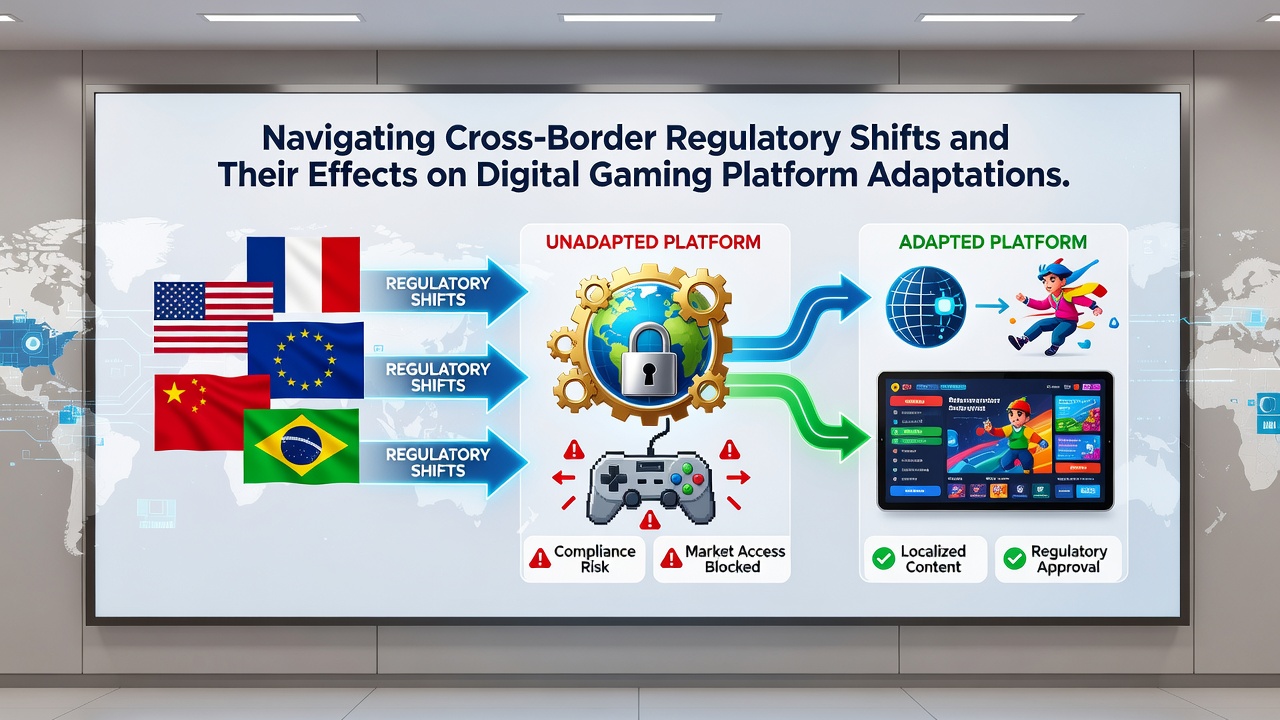
Digital gaming platforms respond to these shifts by deploying configurable compliance engines that update automatically when new rules take effect, reducing the need for manual code changes across thousands of user accounts. Payment gateway integrations now include automated checks against sanctioned entity lists updated by various national authorities, while age verification processes incorporate biometric options approved in specific regions. Data indicates that platforms adopting these modular systems experience fewer service interruptions during regulatory transitions compared with those relying on static configurations.
Technology and Operational Adjustments
Operators also refine their marketing and bonus structures to align with advertising restrictions that differ by country, using audience segmentation tools to exclude users from regions where promotional language is limited. According to reports from the European Commission, platforms that centralized compliance monitoring across borders reduced audit preparation time by nearly 30 percent in recent cycles. At the same time, partnerships with local legal experts help platforms anticipate upcoming changes in places like Australia and Singapore, where draft legislation on loot box mechanics and in-game purchases continues to evolve.
Conclusion
Cross-border regulatory shifts require ongoing investment in adaptable infrastructure and specialized personnel, yet they also create opportunities for platforms that can demonstrate consistent compliance across markets. Those who monitor legislative calendars and maintain flexible technical foundations position themselves to handle future adjustments without major service disruptions, while users benefit from clearer disclosures and more reliable access controls in regulated environments.